
 English
Views: 0 Author: Site Editor Publish Time: 2026-02-25 Origin: Site


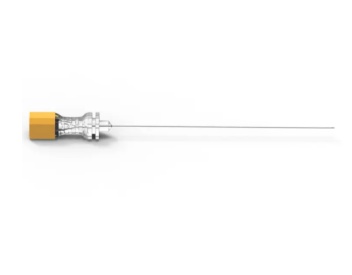
When people ask, “how big is a spinal block needle?” they usually mean two things: gauge (thickness) and length. And for hospitals, clinics, and distributors sourcing a Spinal Needle, those two dimensions matter for more than comfort—they affect puncture feel, cerebrospinal fluid (CSF) return behavior, handling, and compatibility with technique and patient anatomy.
At Jiangsu Province Mingsheng Medical Apparatus Industry Co., Ltd., we support customers who need clear, practical sizing guidance—not confusing catalog pages. In this article, we’ll explain the typical size ranges used for spinal blocks, how gauges translate into “big vs small,” what lengths are commonly used, and how to select an appropriate spinal needle configuration for different clinical and procurement requirements. (This is product and sizing information intended for professional use and purchasing decisions.)
A spinal block needle size is typically defined by:
Gauge (G) – the needle’s outer diameter (thickness).
Higher gauge number = thinner needle (e.g., 27G is thinner than 25G).
Length (mm or inches) – how long the needle is from hub to tip.
Spinal needles also vary by:
Tip design (e.g., Quincke cutting tip vs Whitacre pencil-point)
Introducer use (often paired with very thin needles)
Hub design, markings, and coating (handling and control)
In routine spinal anesthesia products, common gauge offerings span from the low 20s to the high 20s. Many major manufacturers offer spinal needles across a broad range—for example, BD Quincke spinal needles list gauges from 18G to 27G, and lengths from 90 mm to 178 mm.
In clinical spinal block practice, however, the most frequently referenced sizes are often 22G, 25G, and 27G, with 25G and 27G being especially common in many settings.
22G: thicker, often associated with faster flow/CSF appearance but larger puncture size
25G: a widely used balance of handling and size
27G: thinner; may require more careful handling and sometimes an introducer depending on technique
(Exact selection depends on clinician preference, patient factors, and institutional standards.)
Length is usually chosen based on patient body habitus and approach. A widely used standard length is 90 mm (3.5 inches), and many product lines explicitly include that size (for example, 25G × 90 mm offerings are common).
At the same time, spinal needle lines often include longer lengths for specific needs—BD’s Quincke family lists lengths up to 178 mm.
So, if you want a simple answer to “how big”:
Thickness (gauge): commonly 22G–27G in many spinal block products
Length: commonly around 90 mm, with longer options available up to ~178 mm
Spinal needle spec | What it means | What it changes in practice |
Gauge (e.g., 22G / 25G / 27G) | Needle thickness | Handling feel, puncture size, flow/CSF return behavior |
Length (e.g., 90 mm / 120 mm / 178 mm) | Needle reach | Suitability for different patient anatomies and approaches |
Tip type (Quincke vs pencil-point) | Cutting vs non-cutting style | Tactile feel, technique preference, procurement standardization |
Introducer use (yes/no) | Guide needle for stability | Helpful for thinner gauges to reduce bending and improve control |
When people compare “needle size,” they sometimes overlook that tip design changes the overall behavior of a spinal needle.
A Quincke spinal needle is often described as having a beveled cutting tip. BD’s Quincke family is offered across wide gauge and length ranges (18G–27G; 90–178 mm).
Why it matters for buyers:
Quincke-type needles are widely used, familiar, and available in many configurations, which can simplify purchasing and standardization across departments.
Pencil-point needles are common in modern practice and are also available in typical spinal sizes. For example, BD’s Whitacre family lists gauges 22G–27G and lengths 90–119 mm.
Why it matters for buyers:
Pencil-point designs are often selected as part of institutional preference and clinician technique, so procurement often needs consistency in tip type—not just gauge/length.
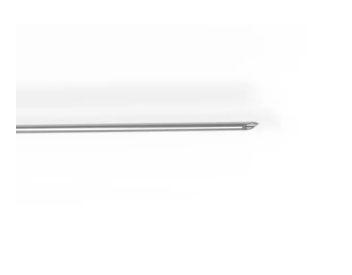
Because gauge is a standardized system, many catalogs also show approximate diameters. One example listing for a 25G spinal needle shows 0.50 mm (approx.) for gauge diameter.
(Exact diameter can vary slightly by standard references and manufacturer tolerances, so procurement should confirm on the product datasheet for the chosen model.)
From a practical procurement standpoint, the most important “big vs small” takeaway is:
Lower G number = thicker needle
Higher G number = thinner needle
90 mm is a very common length baseline, with longer options for specific needs
Because spinal anesthesia is a professional procedure, spinal needle size selection is typically guided by clinical protocol and clinician preference. However, from a product and procurement standpoint, the goal is to translate that clinical preference into a stable, repeatable purchasing standard—so every department receives the same handling feel, compatible accessories, and consistent documentation.
At the sourcing level, we recommend procurement teams align on five practical points:
Most facilities benefit from choosing one or two “default” gauges for routine spinal blocks, often in the mid-to-high 20s, along with a standard length (commonly around 90 mm). This approach simplifies inventory, reduces substitution risk, and supports consistent clinician experience. Then, add longer or alternative specs for special situations (for example, larger patient habitus or different approaches). The key is to avoid over-fragmenting the SKU list—too many variants can cause supply confusion and stockouts.
Needle size is not only gauge and length—tip type is a major part of what clinicians feel in use. If your team prefers Quincke (cutting tip) or a pencil-point style (such as Whitacre/Sprotte), specify this clearly in purchasing documents. Without a tip-type requirement, it’s easy to receive “same gauge, wrong feel” substitutions that disrupt standard technique and training consistency. Tip design also affects how introducers and handling steps fit into your workflow.
If your facility serves a broad range of patient anatomies, you may need both standard and longer lengths available—ideally within the same product family and tip design. This improves clinical flexibility while keeping procurement and training consistent. In practice, many hospitals keep a standard length for daily use and maintain a smaller quantity of longer options as backup.
Very thin spinal needles are sometimes used with introducers depending on technique and product design. If your workflow involves introducers—whether as separate items or part of a kit—confirm compatibility in advance. Alignment here reduces procedure interruptions and avoids “fits on paper, awkward in use” issues. From a purchasing standpoint, compatibility should be defined at the system level: needle + introducer + packaging format.
For medical devices, long-term value is tied to consistency and documentation. Buyers often require:
consistent coating/finish and clear markings
stable sterile packaging that protects the needle and maintains integrity
lot traceability for internal quality systems
documentation suitable for audits, import, and distribution requirements
This is especially important for distributors supplying multiple hospitals, where traceability and labeling accuracy support downstream compliance.
To avoid surprises after delivery, we recommend asking for:
gauge and length options (with clear SKU mapping)
tip type specification and drawings
packaging unit details (box/case)
sterilization method and shelf-life labeling
certificates and quality documentation your market requires
samples for clinician evaluation (when appropriate)
So, how big is a spinal block needle? In most product families, size is defined by gauge (thickness) and length. Common spinal needle offerings include gauges in the 22G–27G range with widely used lengths around 90 mm, and some product lines extend to longer lengths (up to around 178 mm) for specific needs.
The best selection depends on your institution’s technique preferences, patient population coverage, and standardization goals.
To learn more about spinal needle configurations, documentation, and supply support, you’re welcome to contact Jiangsu Province Mingsheng Medical Apparatus Industry Co., Ltd. for detailed product information.
Many spinal needle products commonly use 90 mm (3.5 inches) as a standard length, with longer lengths available when needed.
A 27G needle is thinner than a 25G needle (higher gauge = thinner).
Some major product families list spinal needle gauges spanning 18G to 27G, with many common clinical choices in the low-to-high 20s.
Yes. Common tip styles (such as Quincke cutting tips and pencil-point designs like Whitacre/Sprotte) differ in feel and handling, so buyers should standardize by tip type as well as size.


