
 English
Views: 0 Author: Site Editor Publish Time: 2026-02-21 Origin: Site


When hospitals, distributors, and clinical procurement teams ask us, “how long is a spinal needle for C section?”, they’re usually trying to solve a very practical sourcing problem: selecting a spinal needle specification that fits common clinical use, works reliably across patient body types, and supports standard anesthetic workflows with consistent performance.
From a manufacturing and supply perspective, spinal needles are not “one-size-fits-all.” Even for cesarean section anesthesia, needle length choices depend on the anesthesia technique, patient anatomy considerations, and hospital preference for needle tip design (cutting vs pencil-point), gauge, and accessory use (like introducers). That said, the market has a clear “mainstream” length range that most facilities recognize: 3.5 inches (about 90 mm) is widely used as a standard spinal needle length, and longer options (commonly around 120 mm and above) are used when additional reach is needed—such as in larger patients or in certain combined techniques.
In this article, we’ll explain what “spinal needle length for C-section” means in real purchasing terms, what lengths are commonly selected, when longer needles make sense, and how to specify spinal needles clearly in procurement documents—without turning this into a clinical how-to guide. We’ll also include a simple table to help you compare typical choices.
Spinal needle length usually refers to the usable needle shaft length (from hub to tip), commonly labeled in mm or inches. For example:
3.5 inch spinal needle = 90 mm
5 inch spinal needle ≈ 120–127 mm (often listed as 120 mm in some catalogs and studies)
6 inch spinal needle ≈ 150 mm
You’ll often see length presented together with gauge and tip type, such as “25G × 90 mm pencil-point.”
The key procurement point: length must match the intended patient population and technique, while still aligning with the facility’s standard kits, introducers, and training preferences.
Across many mainstream product lines and references, 90 mm (3.5 inches) is one of the most commonly stocked spinal needle lengths, including Quincke and pencil-point options.
Why 90 mm is so common in hospital supply:
It fits typical adult spinal anesthesia needs in many settings
It is broadly compatible with standard introducers and spinal kits
It balances control and reach for routine cases
From a purchasing perspective, if your goal is to cover the majority of routine C-section cases with a single “default” length, 90 mm is often the baseline starting point (while still keeping longer lengths available for special cases).
While 90 mm is widely used, longer needles exist for good reasons. Clinical references note that most spinal needles are 70–90 mm, and longer needles (for example, 120–155 mm) are available for larger patients or certain combined approaches.
In practical terms, longer lengths may be selected when:
The facility serves a patient population where additional reach is frequently needed
The anesthesia team prefers having a longer option available to avoid “almost-but-not-quite” situations
Stocking strategy is designed to reduce delays when longer reach is required
It’s also worth noting that some discussions describe using a 120 mm spinal needle in specific circumstances, including when a longer path is required.
Procurement takeaway: Many hospitals standardize on 90 mm as the routine choice and also stock 120 mm (and sometimes 150 mm) as “backup lengths” to cover broader patient needs.
When buyers focus only on length, they sometimes miss a more important point: the feel and performance in use depend heavily on gauge and tip style.
Smaller gauge (higher number) can mean different resistance/feel and different flow characteristics
Many facilities have standard gauge preferences based on their protocols and training
Quincke (cutting bevel) and pencil-point (atraumatic) needles are both common in the market
Different hospitals standardize differently based on preference, training, and inventory consistency
Because your request is product-focused, our suggestion is: specify length + gauge + tip design together in every purchase order to avoid receiving the “right length” but the wrong clinical format.
Common Label | Length | Where it’s commonly used in supply planning | Why buyers stock it |
Standard adult length | 90 mm (3.5 in) | Routine spinal anesthesia kits and daily hospital use | Broad fit for typical adults; widely available |
Longer option | ~120 mm (about 4.7–5 in) | Backup for larger patients / special reach needs | Extra reach when 90 mm may be short |
Extra-long option | ~150 mm (6 in) | Less common; specialty stocking depending on facility | Covers edge cases and specific preferences |
From a supplier viewpoint, the quickest way to build a reliable spinal needle purchasing plan is to align with the anesthesia and OB teams on a few practical questions before placing repeat orders. First, confirm your default spinal needle length for routine C-section cases—many facilities standardize on 90 mm for daily use, then keep longer options available when needed. Next, decide whether you want one length only for simplified inventory, or a two-length stocking plan for better coverage; a common strategy is 90 mm as standard + 120 mm as backup to reduce delays in higher-reach cases. Then clarify which tip style your clinicians are trained on and prefer—Quincke or pencil-point—because mixing styles can disrupt familiarity and kit consistency. Finally, confirm whether your workflow requires an introducer to be included in the same kit, since packaging format affects speed, sterility handling, and tray setup. When these points are agreed internally, procurement risk drops sharply and you avoid “right length, wrong system” inventory problems.
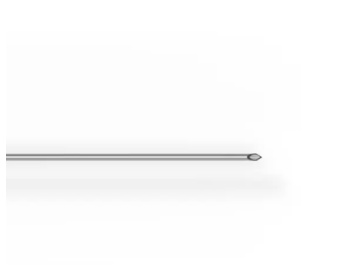
“3.5 inch spinal needle” is not enough—always include:
gauge
tip type
packaging format (single sterile, kit, introducer included or not)
If your facility sees higher BMI cases regularly, relying on only one length can create avoidable delays. A simple two-length plan often improves coverage.
Even if the needle spec is correct, packaging and accessory mismatch can cause friction in real use—especially if your teams rely on standard tray layouts.
In high-usage departments, consistency matters. Small differences in hub feel, markings, or needle stiffness can create avoidable variability.
At Jiangsu Province Mingsheng Medical Apparatus Industry Co., Ltd., we focus on helping buyers specify spinal needle products clearly so inventory matches real usage. In procurement conversations, we typically support customers with:
common length options (including mainstream and longer selections)
consistent specification documentation (length/gauge/tip/packaging)
stable production and quality control for repeat orders
export-ready packaging and labeling support for international distribution
Our goal is not to complicate selection, but to make it easier for buyers to source the right spinal needle specification confidently and consistently.
So, how long is a spinal needle for C section? In most routine supply plans, the most commonly used “standard” length is 3.5 inches (90 mm), with longer options around 120 mm and beyond stocked to cover cases where extra reach is needed. The right choice is ultimately a procurement decision built around your facility’s standard technique, patient population, and kit workflow—because length alone is only one part of what makes a spinal needle “fit for purpose.”
If you’d like to review spinal needle specifications, packaging formats, or build a practical stocking plan (for example, a standard length plus a backup longer length), you can learn more through Jiangsu Province Mingsheng Medical Apparatus Industry Co., Ltd. Our team can share product details and help you match needle options to your purchasing requirements and distribution needs.
Many facilities commonly stock 90 mm (3.5 in) as a standard length for routine cases.
Yes. Longer needles (often around 120 mm and sometimes longer) are available and may be stocked for patients who may require additional reach.
No. Always specify length + gauge + tip type + packaging format, and confirm whether an introducer is required for your workflow.
A two-length plan helps cover routine cases efficiently while keeping a longer option ready for situations where additional reach is needed, reducing delays and improving inventory flexibility.


