
 English
Views: 0 Author: Site Editor Publish Time: 2026-03-04 Origin: Site


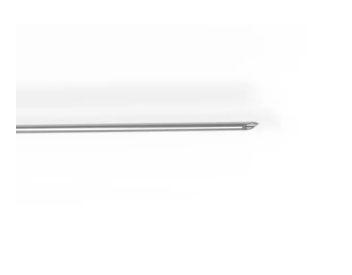
When buyers search “how many types of spinal needle”, they usually aren’t looking for a single number—they’re trying to understand how spinal needles are classified and how those categories translate into real purchasing decisions. In practice, “types” can mean several things at once: tip design (cutting vs atraumatic), needle architecture (stylet, hub, introducer), gauge and length options, or special-use configurations. If you’ve ever compared catalogs from different suppliers, you’ve probably seen the same spinal needle described with different terminology—some list it by tip name (Quincke, Whitacre, Sprotte), others by category (cutting-point vs pencil-point), and others by application set (spinal needle with introducer, with filter needle, with matched syringe, etc.).
At Jiangsu Province Mingsheng Medical Apparatus Industry Co., Ltd., we work with medical device buyers who need clarity, consistency, and reliable specification control. This article is written from our day-to-day perspective supporting procurement and distribution: we’ll explain the main ways spinal needles are classified, the most common “types” recognized in the market, and how to specify the right product parameters for your tender, private label program, or hospital supply chain. We’ll also include simple comparison tables you can reuse in RFQs, reducing ambiguity and helping you compare like-for-like across suppliers.
Instead of forcing one number, it’s more useful to understand four common classification layers:
Tip design type (cutting vs pencil-point/atraumatic)
Named needle designs (e.g., Quincke, Whitacre, Sprotte—often tied to tip geometry and orifice position)
Specification type (gauge, length, bevel orientation, orifice location)
Packaging / set type (single needle, needle + introducer, sterile kit, etc.)
Most procurement teams treat “types” as a combination of (1) + (3) + (4), because these are what affect performance, compatibility, and tender compliance.
Cutting needles have a sharper, beveled tip designed to pass through tissue by cutting. The most widely recognized cutting needle design in spinal products is Quincke. Cutting tips are often chosen when buyers prioritize ease of insertion and straightforward availability across many gauges and lengths.
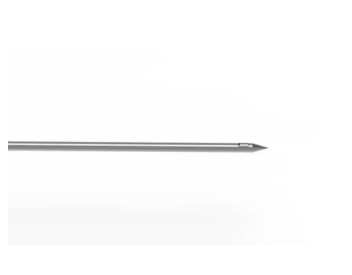
Pencil-point needles are designed to separate fibers rather than cut, typically using a rounded tip with a side opening. The most common named pencil-point designs are Whitacre and Sprotte. Many buyers choose pencil-point designs because they are widely associated in literature with a reduced rate of post-dural puncture headache compared with cutting needles (comparisons are often made between Whitacre and Quincke).
Simple takeaway:
If someone asks “how many types of spinal needle,” the shortest useful answer is: two main tip categories (cutting vs pencil-point), with several named designs under each.
Below are the designs most frequently seen in purchasing documents:
Quincke (cutting bevel) – classic cutting spinal needle design.
Whitacre (pencil-point) – rounded tip with side opening; widely used in spinal anesthesia and diagnostic puncture settings.
Sprotte (pencil-point) – atraumatic design, often described with a side “eye” opening proximal to the tip.
Note: You may also see Tuohy mentioned in discussions about needles, but Tuohy is most commonly associated with epidural needle design rather than a standard spinal needle listing. Some sources mention it in “needle type” comparisons, but buyers should keep spinal vs epidural categories distinct in procurement language.
“Type” Name | Tip Category | Typical Identifiers in RFQs | Why Buyers Choose It |
Quincke | Cutting | Beveled cutting tip, bevel orientation | Widely available; straightforward specification |
Whitacre | Pencil-point | Rounded tip, side port, pencil-point | Often selected for atraumatic approach |
Sprotte | Pencil-point | Pencil-point with side “eye” opening | Often chosen for atraumatic profile and flow characteristics |
(Exact product availability varies by supplier range and country requirements.)
Even within the same design, gauge and length change the buyer experience and compatibility. Spinal needles in common use are often referenced in the 22–27G range, with broader availability across more sizes depending on supplier.
Smaller gauge number = larger diameter (e.g., 22G is larger than 25G)
Gauge affects stiffness, flow characteristics, and handling preference
Many facilities standardize a small set of gauges for consistent training and inventory
Lengths vary by patient population and clinical preference. Suppliers often offer multiple lengths per gauge (for example, product families may list ranges such as 90 mm up to longer lengths).
From a buyer standpoint, the key is to define the required length clearly so the product matches local protocols and avoids tender disputes.
Many spinal needle purchases are not “needle only.” They are systems that reduce variability in use and improve handling.
Introducer needles are commonly used to support insertion of finer spinal needles, especially in smaller gauges. Literature discussing introducer use notes typical introducer ranges in common kits (e.g., 18G–20G).
For procurement, what matters is whether the tender requires:
spinal needle alone
spinal needle + introducer
spinal needle set with matched components (syringe, filter needle, etc.)
Many hospitals prefer kits to reduce assembly steps and standardize workflow. In this case, “type” may mean the full kit configuration, sterile barrier, labeling, and included accessories.
If you need a clean statement for a blog, catalog, or sales sheet:
Two major types by tip: cutting (e.g., Quincke) and pencil-point/atraumatic (e.g., Whitacre, Sprotte).
Multiple variants by specification: each type is offered in different gauges and lengths.
Multiple variants by supply format: needle-only, needle + introducer, or sterile kits.
So the “number” changes depending on whether you mean design family, spec variation, or packaging configuration—which is exactly why RFQs should define “type” clearly.
RFQ Item | What to Write | Why It Prevents Errors |
Tip design | Cutting (Quincke) or Pencil-point (Whitacre/Sprotte) | Avoids wrong clinical preference |
Gauge | e.g., 22G / 25G / 27G | Ensures compatibility and standardization |
Length | mm or inches (must be explicit) | Prevents wrong fit for intended use |
Needle material | Stainless steel grade/spec if required | Aligns with quality expectations |
Hub features | CSF visualization hub, color code, lock style | Improves handling consistency |
Introducer | Required / not required; gauge/length | Avoids incomplete supply |
Sterile packaging | EO, blister type, labeling language | Tender compliance and traceability |
Regulatory docs | Needed certificates and test reports | Speeds qualification process |
In procurement, use “pencil-point” or specify Whitacre/Sprotte style, rather than relying on vague descriptors.
Two suppliers may both list “Whitacre,” but the hub design, side port geometry, or available lengths can differ. Always match:
gauge + length
tip design name
included accessories (introducer or not)
If you buy a kit, specify the kit contents line-by-line to avoid substitutions.
So, how many types of spinal needle are there? In most purchasing conversations, the most useful answer is: two main tip categories (cutting and pencil-point), with several widely recognized designs such as Quincke, Whitacre, and Sprotte, and then multiple variants by gauge, length, and packaging configuration.
For buyers, the real goal isn’t counting types—it’s preventing specification gaps that lead to mismatched deliveries. When you define “type” clearly in your RFQ (tip design + gauge + length + set configuration), you get more consistent quotations, easier compliance checks, and smoother repeat ordering.
If you are sourcing spinal needle products for distribution, hospital supply, or private label programs and want support defining specifications, packaging options, and documentation alignment, you are welcome to learn more through Jiangsu Province Mingsheng Medical Apparatus Industry Co., Ltd. and contact our team for product information and sourcing guidance.
Most commonly, spinal needles are grouped into two main types by tip design: cutting and pencil-point (atraumatic). Within these, there are multiple named designs and size variants.
Quincke is a cutting-bevel design, while Whitacre is a pencil-point design with a side opening. They are often compared in clinical literature and procurement documents.
Yes. Each spinal needle design is typically offered in multiple gauges and lengths, so “type” in purchasing should include the exact specification.
An introducer can help guide finer spinal needles and improve handling during insertion, especially with smaller gauges; many kits include introducers as standard components.


