
 English
Views: 0 Author: Site Editor Publish Time: 2026-09-01 Origin: Site


Selecting the optimal nerve block needle represents a critical decision in modern anesthesia practice. This precise choice directly balances patient safety, procedural efficiency, and overall clinical outcomes in the operating room. Unfortunately, utilizing inferior devices actively increases the risk of intraneural injection, unintentional vascular puncture, and prolonged block times. Furthermore, the global shift toward ultrasound-guided techniques means traditional tactile-feedback tools can no longer stand alone. Today’s clinicians need specialized equipment tailored to advanced visualization methods.
In this comprehensive guide, we will explore how specific needle designs influence block success. You will learn an evidence-based framework designed for anesthesiologists, clinical directors, and procurement teams. This resource helps you confidently evaluate, select, and standardize your regional anesthesia inventory to maximize clinical safety.
Tip Design Dictates Safety: Short-bevel and pencil-point tips offer superior tactile feedback and reduce the risk of fascicular injury compared to sharp, long-bevel needles.
Visibility is Non-Negotiable: A dedicated ultrasound nerve block needle with laser-etched or dimpled tips is essential for maintaining visualization during steep approach angles.
Match Size to Target: Optimal gauge and length are dictated by block depth and required flow rates; standardizing 2-3 specific sizes covers 80% of common peripheral blocks.
Dual-Guidance Adds Value: Needles supporting both ultrasound and electrical nerve stimulation offer a vital safety redundancy for deep or complex blocks.
Every successful peripheral block relies on specialized equipment. Using a high-quality Nerve Block Needle ensures reliable delivery of local anesthetics while minimizing patient trauma. Clinicians must evaluate tools based on several strict success criteria.
Reduced tissue trauma: The instrument should separate tissue planes safely instead of slicing through them.
Reliable echogenicity: Clear visibility under ultrasound remains essential, particularly at steep insertion angles.
Optimal fluid dynamics: The inner lumen must support smooth injection pressures.
Minimal deflection: The shaft must resist bending as you advance it through dense muscle layers.
Proper needle selection directly mitigates severe clinical risks. Suboptimal tools frequently lead to Postoperative Neurologic Symptoms (PONS). If a sharp tip easily pierces a nerve fascicle, patients suffer long-term nerve damage. Furthermore, accidental intravascular injection causes Local Anesthetic Systemic Toxicity (LAST). Using proper equipment provides crucial tactile feedback, warning the clinician before accidental vascular or neural puncture occurs.
Balancing inventory creates an operational challenge. Hospitals often face SKU bloat. Clinical directors want to reduce inventory costs, while anesthesiologists demand specific tools for complex cases. Finding the right balance involves standardizing core supplies while retaining a few specialized needles for difficult patient anatomies.
Best Practice: Standardize your primary inventory around two to three versatile needle sizes. This strategy meets most clinical needs while keeping procurement manageable.
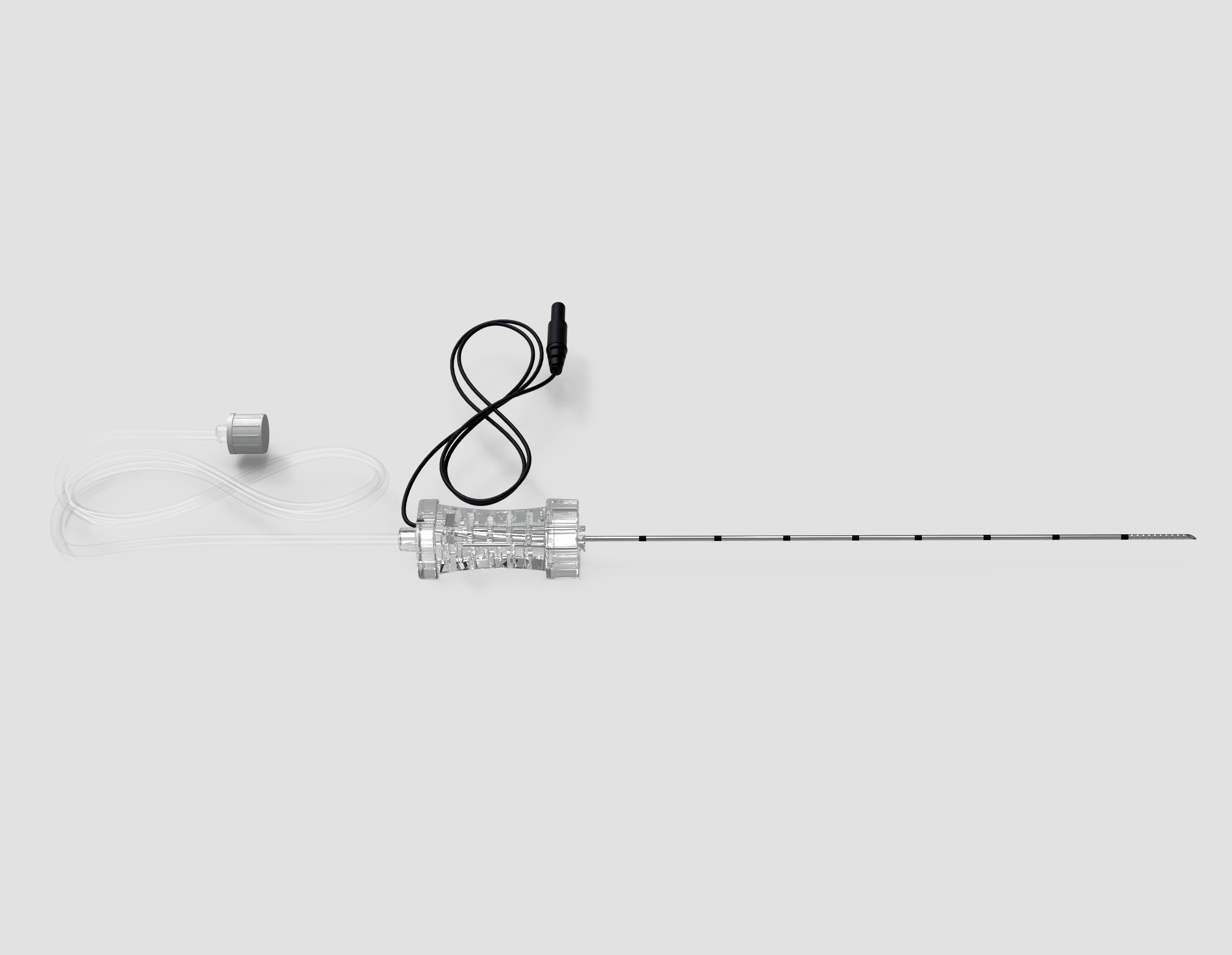
Tip geometry dictates how the instrument interacts with human tissue. You must evaluate various nerve block needle types based on safety profiles and tissue penetration dynamics.
Short-bevel designs serve as the gold standard for most peripheral blocks. They provide a distinct "pop" as they pass through fascial planes. This tactile feedback helps clinicians identify exact anatomical depth. More importantly, short-bevel tips push nerves aside rather than cutting them. This drastically reduces fascicular injury risk.
However, these designs require more force to advance. Applying extra force sometimes bends thinner gauge needles. You must maintain careful alignment to avoid shaft deflection during deep blocks.
Clinicians generally avoid long-bevel designs for peripheral blocks. The sharp, cutting edge carries a much higher risk of nerve slicing. It also easily penetrates blood vessels. While highly useful for specific skin-puncturing needs or vascular access, you should keep these away from delicate neural structures.
Common Mistake: Never substitute a standard long-bevel hypodermic needle for a true regional block procedure to save time. The risk of intraneural injection increases exponentially.
Non-cutting tips offer the highest safety margin against intraneural injection. They gently part tissue fibers and refuse to easily puncture tough nerve sheaths. This design makes them incredibly safe for complex blocks near vital structures.
Despite their safety, pencil-point designs pose implementation risks. Their smooth, rounded surfaces often prove difficult to track on ultrasound screens. Additionally, penetrating tough skin usually requires a separate introducer needle, adding an extra step to the procedure.
Visualizing the needle tip remains the most critical factor in modern regional anesthesia. The problem with standard metal needles is simple physics. Smooth metal surfaces reflect sound waves away from the transducer. When you insert a needle at angles greater than 30 degrees, it often disappears from the screen. This steep out-of-plane technique requires specialized equipment.
Sourcing a reliable ultrasound nerve block needle solves this visibility issue. Manufacturers use several echogenic enhancements to keep the tip visible.
Laser Etching and Dimpling: Manufacturers create physical alterations near the tip. These microscopic grooves scatter sound waves directly back to the ultrasound probe. This enhancement proves ideal for in-plane visualization.
Echogenic Coatings: Some designs feature a specialized polymer coating. This material traps microscopic air bubbles along the entire shaft. The trapped air creates highly reflective surfaces, boosting echogenicity regardless of the insertion angle.
We must apply skeptical evaluation to these technologies. Acknowledge a simple truth: no needle is perfectly visible at 90-degree insertion angles. Echogenicity features greatly supplement visual feedback. They do not replace proper needle-probe alignment skills. The operator must still utilize subtle probe tilting and tissue movement techniques to track the tip.
Selecting the correct dimensions ensures the local anesthetic reaches the target safely. A reliable regional anesthesia needle must balance stiffness, patient comfort, and fluid dynamics.
Gauge sizes typically range from 20G to 25G. The industry standard for most single-shot blocks sits comfortably at 21G or 22G. These sizes provide excellent balance. They offer enough stiffness for easy steering through dense tissue. Simultaneously, they maintain an adequate lumen size for reasonable injection pressure.
Smaller gauges, such as 24G, increase fluid resistance significantly. This high resistance makes it harder for the clinician to "feel" dangerous intrafascicular injection pressures. If the syringe feels tight, the operator might miss a crucial warning sign of intraneural placement.
Needle length typically spans from 25mm to 150mm. You must match the length to the anatomical depth of the target.
Superficial Blocks: Procedures like Interscalene or Axillary blocks require shorter lengths, typically 25mm to 50mm. Using a shorter shaft drastically reduces the risk of advancing too far into delicate neck or arm structures.
Deep Blocks: Procedures like Sciatic or Lumbar Plexus blocks demand longer shafts, usually 80mm to 150mm.
Longer needles remain highly prone to deflection and bending. Emphasize the need for robust shaft materials in these lengths. If a 150mm needle deflects slightly at the skin, the tip might miss the target nerve by several centimeters.
Block Type | Typical Target Depth | Recommended Gauge | Recommended Length |
|---|---|---|---|
Interscalene | Superficial (1-3 cm) | 22G | 50mm |
Axillary | Superficial (1-3 cm) | 22G | 50mm |
Femoral | Moderate (2-4 cm) | 21G - 22G | 50mm - 100mm |
Sciatic (Popliteal) | Moderate (2-5 cm) | 21G | 100mm |
Lumbar Plexus | Deep (6-10 cm) | 20G - 21G | 100mm - 150mm |
Procurement teams hold significant responsibility in modern healthcare. Auditing various nerve block products requires a strict focus on safety features and compatibility.
First, assess the need for single-shot versus continuous catheter kits. Single-shot needles handle the vast majority of routine surgeries. However, complex orthopedic cases often require prolonged pain management. In these scenarios, investing in integrated catheter-over-needle systems provides immense clinical value. These continuous kits allow for prolonged anesthetic infusions.
Next, evaluate dual-guidance compatibility. Modern procedures often combine ultrasound with peripheral nerve stimulation. Ensure the selected needle features a fully insulated shaft and a conductive tip. This allows concurrent use with a peripheral nerve stimulator, providing vital safety redundancy when ultrasound images appear unclear.
Finally, conduct rigorous vendor due diligence. Regulatory compliance acts as your baseline. Ensure all new products feature ISO 80369-6 (NRFit) compliance. These specialized connectors physically prevent accidental cross-connections with intravenous lines, eliminating a major source of hospital error. Also, verify the reliability of the supply chain. Vendors must offer robust training materials for your clinical staff to ensure seamless adoption of new equipment.
Best Practice: Always request physical samples from vendors before committing to a contract. Allow your lead anesthesiologists to test echogenicity in a simulated environment.
Choosing the right regional anesthesia needle requires carefully balancing tactile feedback, echogenicity, and precise dimensional accuracy. Substandard tools compromise visualization and increase neurological risks. By prioritizing short-bevel designs, echogenic enhancements, and appropriate sizing, you significantly elevate patient safety.
We advise procurement committees and clinical directors to take immediate action. Run structured clinical trials using products from two to three shortlisted vendors. Focus heavily on direct feedback from your anesthesiologists regarding ultrasound visibility, handling characteristics, and injection feel. By empowering clinicians with the right equipment, your facility ensures safer, faster, and more effective regional blocks.
A: Echogenic needles feature physical enhancements like laser etching, dimpling, or specialized polymer coatings. These alterations scatter ultrasound waves directly back to the probe, making the needle highly visible on the screen. Non-echogenic needles have smooth metal surfaces that reflect sound waves away, often making them invisible during steep insertion angles.
A: Short-bevel needles typically feature an angle of 30 to 45 degrees. They are preferred because they gently push nerve fascicles and tissue aside rather than slicing through them. This significantly reduces the risk of accidental nerve injury and provides better tactile feedback as the needle passes through fascial layers.
A: A 22G needle is generally considered the best choice for an interscalene block. It offers the perfect balance. It is stiff enough to control accurately but small enough to minimize tissue trauma. A length of 50mm is usually recommended to prevent advancing too deeply into neck structures.
A: Yes. Even with advanced ultrasound guidance, dual-guidance techniques offer a critical safety redundancy. Needles with insulated shafts and conductive tips allow simultaneous use of a nerve stimulator. This is especially vital for deep blocks or patients with difficult anatomy where ultrasound visibility might be severely compromised.
A: Yes, adopting NRFit (ISO 80369-6) connectors is rapidly becoming a global regulatory mandate. These specialized connectors are physically incompatible with standard Luer connectors. This design totally prevents the accidental injection of regional anesthetics into intravenous lines, thereby preventing catastrophic medical errors.


