
 English
Views: 0 Author: Site Editor Publish Time: 2026-09-29 Origin: Site


Electrical nerve stimulation remains an indispensable pillar of regional anesthesia. Anesthesiologists consistently rely on it as a standalone technique or a crucial backup to modern ultrasound visualization. However, standardizing the equipment used across varied clinical settings often proves challenging. Facilities need devices that ensure precise current delivery while simultaneously minimizing the risk of inadvertent neurological injury. Clinicians also demand reliable tactile feedback during needle advancement through complex fascial planes.
This guide provides clinical directors and procurement teams with a practical, objective framework. We will explore exactly how to evaluate and select the best instruments for your facility. You will learn how to assess tip geometry, verify coating integrity, and ensure complete compatibility with your existing stimulation devices. By prioritizing the right features, you can standardize your inventory, enhance patient safety, and streamline block procedures across all departments.
Precision in electrical localization relies on a high-quality insulation coating nerve block needle that restricts current strictly to the uncoated bevel tip.
Objective evaluation requires assessing tip geometry, dielectric coating durability, and compatibility with standard equipment.
Transitioning to dual-guidance (ultrasound + stimulation) necessitates needles optimized for both echogenicity and electrical conductivity.
Facility-wide adoption should prioritize vendor reliability, ISO compliance, and the ability to consolidate inventory across varied regional block procedures.
To understand the clinical value of these tools, we must look at the underlying physics. The fundamental goal of electrical localization is precise spatial orientation. You want to know exactly how close the needle tip is to the target nerve.
An Insulated Nerve Block Needle functions by isolating the electrical current along its entire shaft. The device concentrates the current exclusively at the pinpoint exposed metal tip. This design allows clinicians to elicit a precise motor response at very low electrical thresholds. Typically, a response between 0.2 mA and 0.5 mA indicates optimal proximity to the nerve. Because the shaft prevents current leakage into surrounding muscle tissue, you get a clean, localized response rather than widespread, non-specific muscle twitching.
Using poorly coated needles introduces severe clinical realities. If a needle coating features micro-tears or uneven thickness, the current escapes along the shaft. This dispersion creates false-negative motor responses. A clinician might dial up the current threshold to 1.5 mA just to see a twitch. By the time that motor response occurs, the physical needle tip might already be inside the nerve bundle. Inadvertent intraneural injection remains one of the highest risks in regional anesthesia. It can lead to long-lasting neuropathic pain or permanent motor deficits.
A reliable nerve stimulation needle acts as a primary diagnostic safeguard. Even in modern ultrasound-guided workflows, visuals can deceive. Acoustic shadowing or steep needle angles can obscure the tip. Electrical stimulation provides objective, binary feedback. If a motor twitch occurs below 0.2 mA, you immediately know the tip is dangerously close to or inside a nerve fascicle. You can then withdraw the needle slightly before injecting any local anesthetic.
Not all needles offer the same level of performance. Procurement teams must scrutinize the manufacturing details to ensure clinical reliability.
The insulation material dictates both electrical isolation and tissue friction. Manufacturers commonly use PTFE (Teflon) or proprietary polymer blends. PTFE offers exceptional glide through tissue, reducing trauma. However, it must be applied uniformly to avoid flaking. Proprietary polymers often bond better to the metal substrate. They resist micro-abrasions when advancing through dense tissues like the fascia iliaca.
Material Comparison Chart
Coating Material | Tissue Glide (Friction) | Durability During Advancement | Cost Impact |
|---|---|---|---|
PTFE (Teflon) | Excellent (Very Low Friction) | Moderate (Prone to scraping if poorly bonded) | Standard |
Proprietary Polyurethane | Good (Slightly higher friction) | High (Resists micro-tears) | Premium |
Epoxy Resins | Fair | Very High | Variable |
Needle tip design plays a massive role in procedural safety. A standard sharp cutting needle slices easily through tissue. However, it also slices easily through nerves. For regional blocks, clinical consensus favors a short-bevel design, typically around 30 degrees. This geometry maximizes tactile feedback. Clinicians can literally feel a distinct "pop" as the needle passes through fascial planes. Furthermore, a short bevel pushes nerve fascicles aside rather than severing them. We must also assess the exposed surface area at the tip. A smaller exposed area provides higher spatial resolution, ensuring the electrical current remains highly concentrated.
A high-performance stimulator nerve block needle must handle well in the operator's hands. The hub should offer a secure, ergonomic grip for precise rotational control. Evaluate the extension tubing integration. Tubing should be pliable enough to prevent dragging on the needle during injection, yet firm enough to prevent kinking. The electrical lead must feature standard pin connectors. This ensures universal compatibility with any standard nerve block stimulator across different hospital departments.
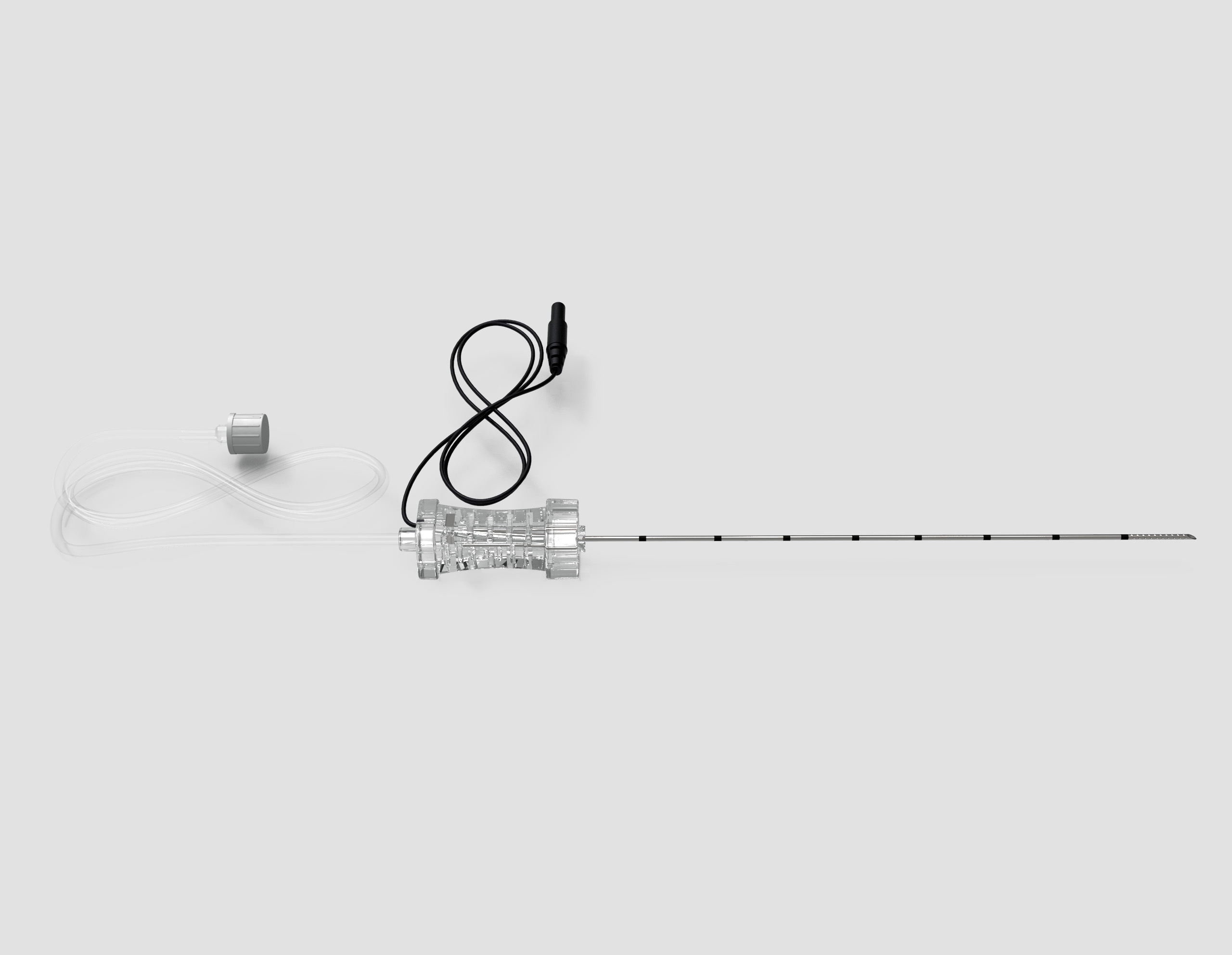
Regional anesthesia has evolved significantly over the last decade. The isolated use of nerve stimulation has largely been replaced by dual-guidance techniques.
Clinicians now use ultrasound visualization to guide the needle trajectory in real time. They simultaneously use electrical stimulation as an objective safety monitor. This dual-guidance approach represents the modern standard of care. It compensates for the limitations of ultrasound, particularly in deep blocks or challenging patient anatomies where the needle tip disappears from the screen.
Combining these two modalities requires specialized equipment. Standard insulation coatings often degrade ultrasound visibility. The plastic or Teflon layer absorbs sound waves, rendering the needle shaft virtually invisible. To fix this, manufacturers add echogenic markings. They use laser etching or dimpling to reflect sound waves back to the probe. The engineering challenge is maintaining electrical isolation. If the laser etching breaches the dielectric coating, current leaks. You must source needles that achieve high echogenicity under the coating or use transparent acoustic reflectors.
Selecting a dual-purpose needle dramatically improves operating room efficiency. Here is how dual-guidance tools streamline workflows:
Eliminates Equipment Switching: Clinicians do not need to pause the procedure to swap a standard echogenic needle for a stimulating one if they lose visualization.
Reduces Infection Vectors: Fewer equipment changes mean a lower risk of breaking the sterile field.
Enhances Confidence: Continuous visual and electrical feedback allows faster needle advancement, reducing total block time.
Transitioning a hospital to a new standard requires careful evaluation. Procurement teams must balance clinical needs with sensible purchasing strategies.
When assessing new needles, you must look beyond the initial unit price. Evaluate the total value driven by clinical outcomes. Cheaper needles with poor insulation often lead to higher block failure rates. A failed block results in delayed surgeries, unplanned general anesthesia conversions, and prolonged PACU stays. Furthermore, premium needles minimize the risk of nerve injury complications. Investing slightly more upfront in reliable equipment yields massive dividends in patient safety and operational efficiency.
A major goal for any procurement department is reducing inventory complexity. You want to avoid buying five different needle brands for five different procedures. Evaluate a vendor’s entire portfolio. Can they provide a unified family of needles? Standardizing inventory requires access to varied lengths and gauges.
50mm needles: Ideal for superficial blocks (e.g., interscalene or supraclavicular).
100mm needles: Standard for intermediate depths (e.g., femoral or axillary blocks).
150mm needles: Necessary for deep blocks (e.g., sciatic or lumbar plexus), especially in high-BMI patients.
Never compromise on manufacturing standards. Demand transparent quality assurance data from the vendor. Essential compliance metrics include:
FDA 510(k) clearance or CE marking for regional anesthesia.
ISO 13485 certification, proving strict medical device quality management.
Documented sterilization protocols (typically Ethylene Oxide).
Robust packaging integrity to prevent needle damage during transit.
Even the best equipment can face resistance if rolled out poorly. Managing the human element is just as critical as the technical specs.
Anesthesiologists rely heavily on muscle memory. Transitioning between different needle brands introduces a learning curve. A new coating material changes the shaft friction. A different bevel angle alters the tactile "pop" through the fascia. Acknowledge this reality early. Provide hands-on training sessions using phantom tissue models. Allow clinicians time to adapt to the new handling characteristics before using them on patients.
Before executing a bulk purchase, conduct a rigorous compatibility audit. Ensure the chosen needles interface seamlessly with the hospital's existing hardware fleet. Test the electrical leads on every stimulator model currently in use. Verify that the extension tubing connects cleanly to standard local anesthetic syringes without leaking under pressure.
Never bypass a clinical trial period. Implement a structured pilot phase lasting two to four weeks. Have your core regional anesthesia team trial the needles across various block types. Collect objective feedback rather than passing verbal comments.
Clinical Pilot Testing Rubric
Evaluation Metric | Scoring (1 = Poor, 5 = Excellent) | Clinical Notes |
|---|---|---|
Ultrasound Visibility (Echogenicity) | 1 - 2 - 3 - 4 - 5 | Visibility at steep angles (>45 degrees). |
Tactile Feedback (Fascial Pop) | 1 - 2 - 3 - 4 - 5 | Clarity of the pop without excessive force. |
Electrical Precision (Motor Response) | 1 - 2 - 3 - 4 - 5 | Ability to elicit twitch at <0.5 mA without leaks. |
Ergonomics & Hub Handling | 1 - 2 - 3 - 4 - 5 | Comfort during rotation and injection. |
The right insulated needle is far more than a simple commodity consumable. It serves as a foundational safety tool in your regional anesthesia practice. By carefully evaluating dielectric coatings, bevel geometries, and echogenic features, you protect patients from severe neurological complications. Balancing electrical precision with clear tactile feedback remains the key to mastering modern regional techniques.
Transitioning to a unified, high-performance needle portfolio streamlines hospital workflows and reduces clinical variables. We advise clinical decision-makers to take immediate action. Reach out to qualified manufacturers today. Request sample sets, review their technical specification sheets, and launch a structured internal evaluation process. Proper equipment selection empowers your clinical team to deliver safer, more effective pain management.
A: The clinical consensus favors a short-bevel design, typically between 30 and 45 degrees. This specific angle balances tactile feedback and safety. It allows clinicians to feel a distinct "pop" when piercing fascial planes. More importantly, the blunt nature of a short bevel tends to push nerve fascicles away rather than slicing through them.
A: Yes, it is entirely feasible. However, if your facility strictly excludes a nerve block stimulator from its protocols, purchasing a non-stimulating echogenic needle might be more cost-effective. Insulated needles are engineered specifically for electrical conductance, making them a premium choice primarily intended for dual-guidance techniques.
A: Micro-tears in the coating cause electrical current to leak along the needle shaft. This dispersion results in a loss of pinpoint accuracy. Consequently, clinicians must use higher milliamperes (mA) to elicit a motor response. This false sense of distance drastically increases the risk of inadvertent intraneural injection.
A: Needle gauge primarily affects procedural mechanics, shaft stiffness, and patient comfort. The actual gauge does not dictate electrical performance. The crucial factor for accurate stimulation is the specific exposed surface area at the very tip of the needle, regardless of the overall shaft diameter.


