
 English
Views: 0 Author: Site Editor Publish Time: 2026-09-15 Origin: Site


Optimal outcomes in regional anesthesia require precise equipment matching. Success heavily relies on the specific physical tools you choose for your patients. Mismatched needle dimensions can quickly lead to needle deflection in deep tissue. They can also cause poor echogenicity or unnecessary tissue trauma. These avoidable issues often complicate otherwise routine regional blocks. Selecting the wrong size directly impacts your ultrasound visibility, injection pressure, maneuverability, and overall patient safety. Every millimeter and gauge increment matters during delicate procedures. This guide provides a clinical and procurement framework for evaluating needle dimensions. We help you balance structural rigidity, flow dynamics, and target depth safely. You will learn how to match anatomical demands to the correct equipment. Ultimately, this approach helps you standardize your facility's inventory efficiently while elevating patient care quality and procedural confidence.
Gauge determines flow and rigidity: Lower gauge (20G) offers better steering for deep blocks; higher gauge (22G) minimizes tissue trauma for superficial blocks.
Length must match target depth: Standardize on 50mm for superficial blocks, 100mm for intermediate, and 150mm for deep approaches (e.g., sciatic or lumbar plexus).
Echogenicity is non-negotiable: Regardless of size, prioritize needles with etched tips or shafts to ensure high visibility under steep ultrasound angles.
Standardization reduces errors: Limiting inventory to a core matrix of versatile sizes streamlines clinical workflows and procurement overhead.
Clinicians must constantly balance multiple physical factors during regional anesthesia. You need excellent tactile feedback to feel fascial "clicks" accurately. You also need good steerability to navigate around vascular structures safely. However, you must weigh these needs against the risk of nerve injury and patient discomfort. The proper Nerve Block Needle Gauge plays a central role in managing these competing clinical demands.
The 22G nerve block needle serves specific, delicate applications in modern medicine. You will find it most useful for superficial peripheral nerve blocks. It is also highly preferred for pediatric patients. When you operate in delicate anatomical regions, smaller profiles protect surrounding structures.
Best for: Superficial blocks, pediatric care, and thin patients.
Tradeoffs: It offers a much lower risk of tissue trauma. However, this thin metal profile is highly prone to bending. It often deflects during deep tissue advancement. You will also experience slower injection flow rates. This slow flow can prolong the procedure slightly.
Best Practice: Use this size when targets sit less than 3 cm deep.
Common Mistake: Pushing this thin gauge through dense muscle fascia. It will bend and deviate from your ultrasound plane.
Most modern facilities rely heavily on the 21G nerve block needle. It stands as the standard workhorse for a good reason. It provides a reliable middle ground for almost all routine procedures.
Best for: Standard adult regional anesthesia.
Tradeoffs: It offers an optimal balance of structural rigidity. You can steer it effectively through moderate tissue depths. It also provides appropriate flow dynamics for local anesthetic delivery. You will rarely struggle with high injection pressure when using this size.
When targets lie deep within the body, thin tools fail. The 20G nerve block needle steps in to solve this problem. It offers substantial column strength. This strength prevents unwanted bending in dense tissue.
Best for: Deep blocks, continuous catheter placement, and steep trajectories.
Tradeoffs: Higher structural rigidity ensures a perfectly straight trajectory. However, it poses a marginally higher risk of patient discomfort. It can cause slightly more tissue trauma if you do not maneuver it precisely. You must handle it with a steady, intentional hand.
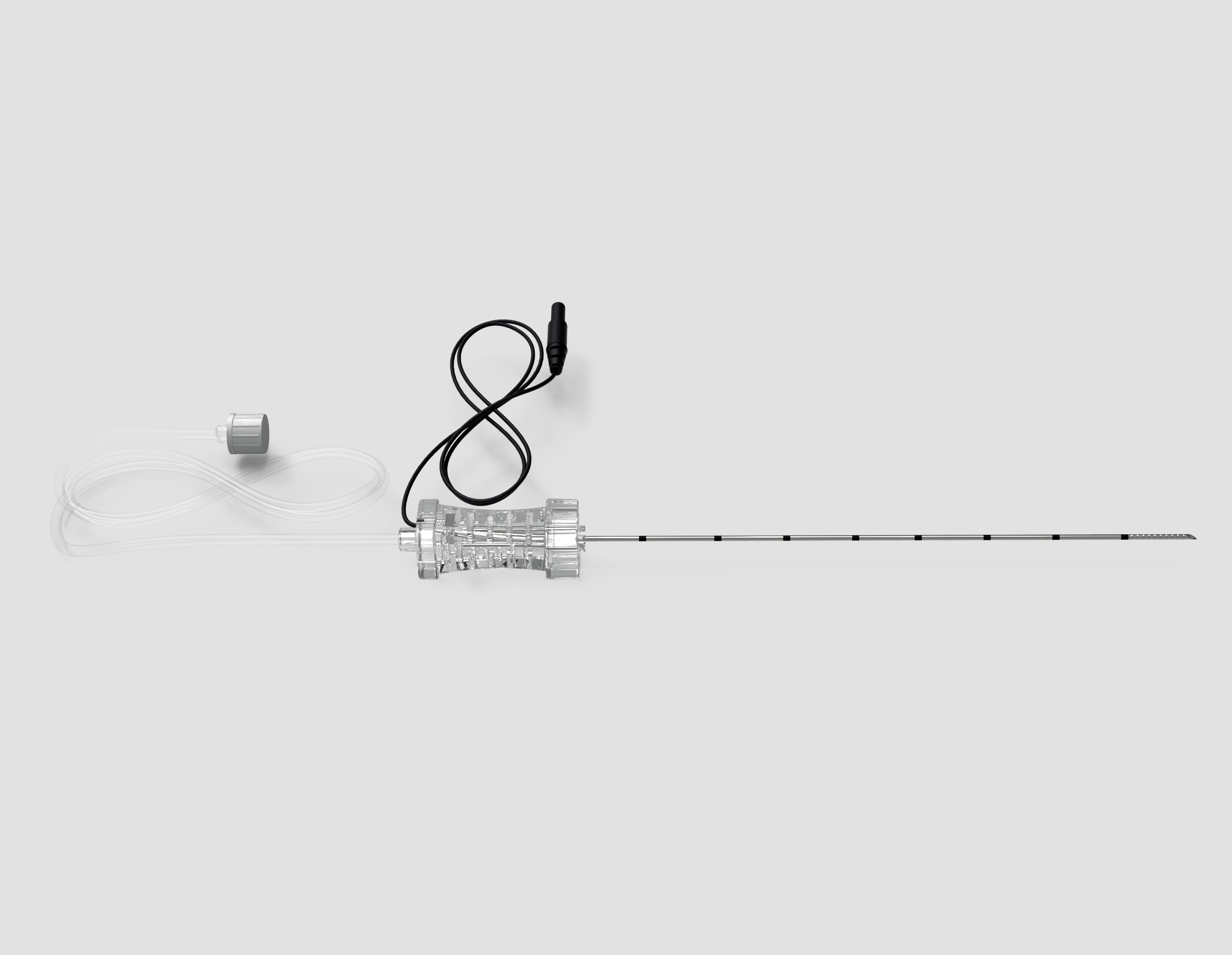
Selecting the optimal Nerve Block Needle Length is a critical clinical decision. You must select the shortest tool capable of reaching the target anatomy safely. Shorter profiles minimize dead space within the tubing. They vastly improve manual handling and ergonomics. Crucially, they reduce the risk of accidental over-penetration into vital structures.
The 50mm nerve block needle excels in shallow anatomical planes. You gain immense control when your hand rests closer to the patient's skin. This short profile prevents you from overshooting superficial targets.
Target Depth: 1–3 cm.
Applications: You will use this primarily for interscalene blocks. It also works perfectly for supraclavicular, axillary, and superficial cervical plexus blocks. Additionally, it handles specific dental local anesthesia applications well.
For intermediate depths, the 100mm nerve block needle is the industry favorite. It easily covers the vast majority of lower extremity and truncal blocks. You will find this size included in most standard adult regional anesthesia kits.
Target Depth: 3–7 cm.
Applications: It fits perfectly for infraclavicular blocks. You also need it for popliteal and femoral nerve blocks. Transversus Abdominis Plane (TAP) blocks frequently require this exact length for safe execution.
Bariatric patients and deep pelvic anatomy demand specialized reach. The 150mm nerve block needle provides the necessary length to access these difficult areas. However, this extended length demands advanced technical skill.
Target Depth: 7–12+ cm.
Applications: You will use this for deep sciatic nerve blocks. The anterior approach often demands this length. It is also required for lumbar plexus blocks and specific neuraxial anesthesia in bariatric populations.
Risk Consideration: Using this length requires advanced ultrasound alignment techniques. You must often use an in-plane approach. The steep angle of insertion makes ultrasound visualization quite difficult. Etched echogenic tips become absolutely mandatory here.
Length Specification | Ideal Target Depth | Common Clinical Applications | Primary Handling Characteristic |
|---|---|---|---|
50mm | 1 - 3 cm | Interscalene, Supraclavicular, Axillary | High precision, minimal deflection |
100mm | 3 - 7 cm | Infraclavicular, Popliteal, TAP, Femoral | Versatile, standard maneuverability |
150mm | 7 - 12+ cm | Deep Sciatic, Lumbar Plexus, Bariatric | Requires advanced ultrasound alignment |
When shortlisting vendors for bulk procurement, dimensions represent just the baseline. You must evaluate the physical features that directly drive clinical outcomes. Your clinical staff relies on these nuanced design elements daily. Evaluating these features carefully prevents operational frustration later.
Modern regional anesthesia relies on sophisticated manufacturing. You should assess the following features rigorously:
Echogenic Enhancements: Look for laser-etched "cornerstone" or dimpled designs. Smooth metal simply reflects sound waves away at steep angles. You must ask: Does it maintain visibility at angles steeper than 45 degrees? Etching traps micro-bubbles of air, creating a bright sonographic signature.
Bevel Design: Evaluate the bevel angle carefully. Short bevels typically sit at 30 degrees. They enhance tactile feedback for distinct fascial layers. More importantly, they reduce the risk of nerve fascicle penetration. Long, sharp bevels slice through nerves silently, whereas short bevels tend to push them aside.
Hub Ergonomics & Tubing: Assess the injection tubing flexibility. Stiff tubing acts like a lever. It can dislodge the tip during aspiration or injection. You want highly pliable extension tubing. It should allow the assistant to inject without disturbing your precise alignment.
Facility managers must simplify their supply chains. You should avoid ordering highly niche sizes unless clinically justified. Having too many variations confuses staff during urgent setups. A standard matrix covers approximately 80% of routine peripheral blocks. We recommend stocking 21G and 22G in 50mm lengths. Combine these with 21G profiles in 100mm lengths. This simplified matrix streamlines clinical workflows and reduces procurement overhead effectively.
Even with the perfect tools, clinical execution carries inherent risks. You must understand how physical dimensions interact with human anatomy. Anticipating these physical interactions prevents unwanted complications. Let us explore the most common mechanical risks during regional blocks.
Deflection remains a major frustration during deep blocks. Using a long, thin tool in dense tissue creates a mechanical disadvantage. The tip often deviates away from your ultrasound plane. This causes you to lose sight of the tip entirely.
The Problem: Dense fascial layers force thin metal to bend upon entry.
Mitigation: Upsize your selection to 21G or 20G for deeper targets. A thicker shaft provides the column strength needed to maintain a perfectly straight trajectory.
Finer gauges naturally increase fluid resistance. This basic physics principle can confuse clinical feedback mechanisms. High injection pressure, usually above 15-20 psi, is a primary indicator of intraneural placement. You must detect this instantly to prevent nerve damage.
The Problem: A 22G lumen creates artificially high resistance. This masks the true tissue resistance feedback.
Mitigation: Ensure inline pressure monitoring devices are calibrated specifically. You must account for the specific gauge being used. Train assistants to recognize baseline resistance differences.
Experienced clinicians rely on tactile feedback. The sensation of "popping" through fascia confirms anatomical location. However, suboptimal designs can trick your hands completely.
The Problem: Poor bevel designs produce false tactile loss-of-resistance sensations. You might think you passed a fascial plane when you actually entered muscle belly.
Mitigation: Require clinical trials of shortlisted equipment before a full facility rollout. You must verify the tactile response with your most experienced anesthesia providers.
Proper selection of block equipment is always a localized decision. You must base your choice on target depth, patient habitus, and necessary flow rates. Balancing trauma reduction against steering capability ensures safe, effective regional anesthesia. When you match the tool strictly to the anatomical demand, your success rates climb significantly.
Your next step should be a thorough internal review. Audit your current block success rates and complication logs carefully. If clinicians frequently struggle with tip visibility or deflection, take action immediately. Re-evaluate your standard stocking matrix. Contact your trusted medical supplier today. Request clinical samples of echogenic 21G and 22G profiles. Conduct hands-on evaluations to find the perfect fit for your clinical team.
A: The 21G needle is widely considered the industry standard for adult peripheral nerve blocks. It offers the best compromise between steerability, optimal fluid flow rate, and minimal tissue trauma. This balance makes it highly versatile for most routine clinical scenarios.
A: Length itself does not dictate visibility directly. Rather, deeper anatomical targets require longer needles inserted at much steeper angles. Steeper angles reflect ultrasound soundwaves away from the probe. Therefore, longer needles must feature advanced echogenic etching to remain clearly visible on the screen.
A: Because the brachial plexus at the interscalene level is typically very superficial, usually 1–3 cm deep, a 22G by 50mm profile is generally preferred. This smaller size helps minimize unnecessary tissue trauma to the delicate surrounding neurovascular structures in the neck.
A: While some basic principles overlap, dental tools are designed for specific intraoral syringes and distinct tissue planes. Medical-grade regional anesthesia requires specialized echogenic profiles. They also require attachable, flexible injection tubing to prevent accidental tip displacement during medication administration.


