
 English
Views: 0 Author: Site Editor Publish Time: 2026-08-05 Origin: Site


Medical distributors face severe margin risks when supplying RF ablation consumables today. This happens because major manufacturers utilize proprietary closed-loop generator systems. Stocking incompatible probes inevitably causes procurement contract breaches. You also risk frustrating clinical delays and dealing with high return rates. Hospitals depend on seamless operational workflows to maintain strict patient safety standards. If a probe fails to connect, the entire surgical procedure halts immediately. This guide outlines the essential technical, regulatory, and supply-chain frameworks you need right now. We will show you exactly how to evaluate third-party compatibility properly. By applying these principles, you can confidently supply cost-effective, universally adaptable consumables. You will achieve this without ever sacrificing clinical safety or ablation performance. Mastering this rigorous evaluation process completely transforms your inventory strategy and ultimately strengthens your most valuable hospital partnerships.
True RF electrode probe compatibility relies on matching three core metrics: generator connector type, thermal sensor mechanism (thermocouple vs. thermistor), and impedance parameters.
Strategic use of an RF convertor and standard electrode extension cable can reduce distributor SKU bloat by allowing standard probes to interface with legacy proprietary generators.
Distributors must demand FDA 510(k) "Substantial Equivalence" documentation from manufacturers to legally and safely market compatible alternative probes.
Evaluating a supplier requires moving beyond basic spec sheets to audit their manufacturing capacity, quality control tolerance, and regulatory track record.
Hospitals rarely rely on a single brand of capital equipment across all clinical departments. They typically possess a mixed fleet of RF generators from several different original equipment manufacturers (OEMs). Pain management clinics might use one distinct system, while neurosurgery departments prefer another. This fragmented reality creates a massive headache for hospital procurement teams.
Distributors attempting to supply OEM-specific probes face exceptionally high inventory carrying costs. You also suffer from severe SKU fragmentation across your product catalogs. Managing dozens of specific, brand-locked probe variants destroys warehousing efficiency. Your capital remains tied up in slow-moving, proprietary stock on the warehouse floor.
OEM manufacturers understand this market dynamic perfectly. They frequently update their generator connector hardware. They execute this strategy deliberately to enforce proprietary consumable purchasing. A minor alteration in a plug housing prevents older or third-party probes from fitting. This deliberate tactic locks hospitals into expensive, single-brand supply chains indefinitely. It actively shuts out independent distributors trying to offer competitive consumable alternatives. Over time, these subtle hardware shifts drain hospital department budgets unnecessarily.
What exactly defines operational success for medical distributors here? Your primary goal involves sourcing a highly consolidated line of premium electrodes. These universally compatible products must meet precise clinical specifications without compromise. You must match shaft gauge, overall length, and active tip dimensions perfectly. Simultaneously, these consumables must interface seamlessly with the hospital’s existing capital equipment. Solving this complex puzzle turns a logistical nightmare into a highly profitable product offering.
Achieving true RF electrode probe compatibility requires profound technical alignment across multiple metrics. You cannot simply guess which device fits a specific generator model.
You must evaluate the physical interface of the device carefully. Modern generators utilize highly varied pin configurations. Common designs include 2-pin, 4-pin, or multi-pin circular hubs. Some OEMs incorporate subtle indexing notches. These notches deliberately prevent third-party insertions. Forcing a mismatched connection creates immediate, dangerous problems. It often causes persistent generator error codes or damages the expensive receptacle entirely. We strongly recommend auditing pin layouts meticulously before approving any new consumable line. Always ask the manufacturer for detailed engineering drawings regarding their connectors.
Accurate thermal tracking dictates ablation safety and overall procedural success. Probes rely on either a thermocouple (TC) or a thermistor to measure active heat generation. A thermocouple uses dissimilar metals to generate a voltage proportional to the surrounding temperature. Conversely, a thermistor relies on specific semiconductor resistance changes. You must match the sensor explicitly to the generator's native reading mechanism.
Mismatched sensors result in highly inaccurate temperature feedback during the procedure. This critical error leads directly to incomplete ablation zones or dangerous tissue charring. Always verify the generator's baseline thermal technology before shipping samples to a clinic.
Compatibility extends far beyond basic electrical connectivity. It remains fundamentally anatomical in nature. You must match the active tip lengths precisely to the targeted nerve or tissue structure. Standard clinical tip sizes routinely include 5mm, 10mm, and 15mm options. Shaft gauges also matter immensely for patient comfort and surgical precision. Common sizes span 18G, 20G, and 22G profiles. These specific dimensions must fit perfectly inside the corresponding introducer cannulas used by the surgeon. This anatomical matching remains absolutely non-negotiable for clinical success.
Specification Type | Critical Parameters | Common Errors to Avoid | Clinical Impact |
|---|---|---|---|
Physical Interface | 2-pin, 4-pin, multi-pin circular hubs | Forcing incorrect pin alignments | Generator error codes, hardware damage |
Thermal Sensor | Thermocouple (TC) vs. Thermistor | Connecting TC probes to thermistor generators | Inaccurate feedback, severe tissue charring |
Anatomical Dimensions | 5mm/10mm/15mm tips, 18G/20G/22G shafts | Mismatched introducer cannula sizes | Surgical delays, improper lesion formation |
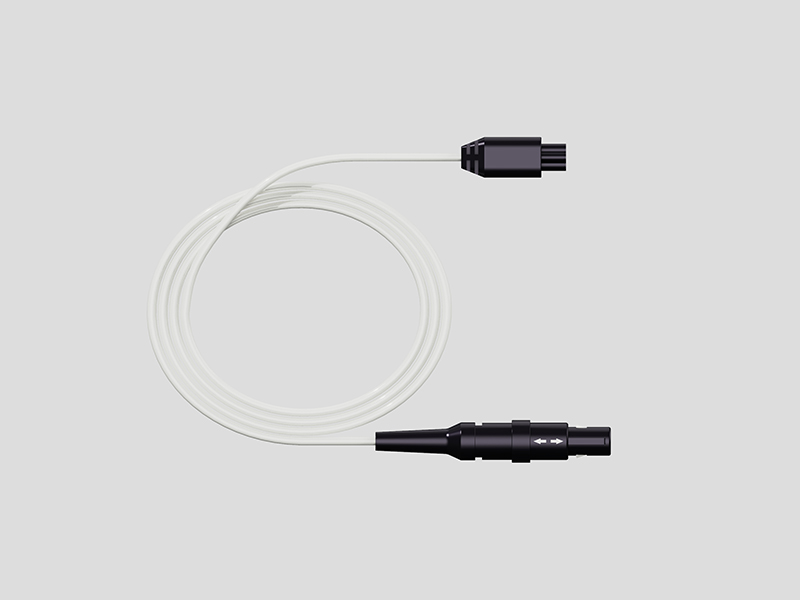
Proprietary generator hubs present a massive barrier to market entry. However, intelligent hardware adaptations solve this complex issue efficiently and safely.
Specific adapter modules bypass proprietary physical lock-ins quite safely. An RF convertor acts as a highly reliable universal bridge. It allows a standardized third-party probe to communicate directly with major OEM generators. This happens entirely without altering internal core software. It also avoids voiding any expensive capital equipment warranties. These modules simply translate physical pin connections while preserving vital electrical integrity. They ensure accurate tissue impedance readings flow seamlessly back to the generator display. Using an adapter module empowers you to bypass artificial hardware constraints completely.
Sterility protocols and operating room workflows represent major clinical concerns during ablation. Extension lines address these specific operational issues directly and elegantly. An electrode extension cable allows the non-sterile generator connection to remain completely outside the sterile field. Meanwhile, the delicate probe operates safely within the sterile surgical zone.
This physical separation protects patients from severe cross-contamination risks. It also simplifies nursing workflows during complex, time-sensitive procedures. Circulating nurses can manage the heavy generator connections effortlessly. They do this without ever needing to scrub into the sterile field.
Furthermore, this modular strategy drives massive SKU consolidation for your distribution business. You can pair one universal probe with several brand-specific extension lines easily. Distributors can then confidently stock just one primary, high-volume probe line. You simply swap the low-cost cable to match whatever proprietary generator the hospital already owns. This dramatically reduces warehouse inventory bloat. It simplifies supply forecasting and frees up valuable capital previously trapped in redundant stock.
Distributors bear immense legal responsibility for product safety and clinical performance. Strict regulatory compliance guarantees both vital legal protection and proven clinical efficacy.
You must carefully review a supplier’s official FDA 510(k) documentation before signing contracts. Pay special attention to the "Technological Characteristics" and "Intended Use" sections. These specific sections verify true legal equivalence in the eyes of regulators. They establish what the FDA officially calls "Substantial Equivalence" with predicate OEM devices. This essential documentation formally proves the alternative probe performs identically to the original brand. Never accept vague marketing claims of universal compatibility. You must demand to view these official regulatory summaries directly.
Investigate the manufacturing partner's overall quality framework deeply. Look closely for mandatory ISO 13485 certification. This internationally recognized standard proves they maintain rigorous medical device manufacturing controls. You must aggressively avoid suppliers who lack transparent bio-compatibility testing documentation. ISO 10993 compliance is strictly required for any patient-contact materials. This covers mandatory cytotoxicity and sensitization testing. Proper sterilization validation records, such as Gamma or EO gas testing logs, must also remain fully accessible.
The legal liabilities of supplying non-compliant "knock-off" probes are terrifying. Financial penalties from adverse surgical events can easily bankrupt unprepared distribution companies. Poorly manufactured probes often lack rigorous thermal validation data entirely. They might overheat unpredictably or fail completely during delicate neurosurgical procedures. Proper regulatory vetting mitigates these catastrophic risks from the very start. It fiercely protects your hard-earned brand reputation. More importantly, it ensures absolute patient safety during every single medical procedure.
Finding a top-tier manufacturer requires much more than browsing basic specification sheets online. You must deeply evaluate their entire operational ecosystem and technical transparency.
Trialing a new compatible consumable line requires a highly structured, conservative approach. Never attempt to replace an entire hospital inventory overnight. Instead, roll out the new product in measured, confidence-building phases.
Start the process by conducting comprehensive ex-vivo testing in a controlled laboratory setting.
Introduce the validated probes initially for specific, non-critical pain management procedures.
Actively gather physician feedback regarding handle ergonomics, needle sharpness, and insertion smoothness.
Expand clinical usage into complex neurosurgical ablation only after establishing total physician confidence.
Use a rigorous checklist when interviewing any prospective manufacturing partners. Do not skip these essential verification steps.
Data Transparency: Do they provide comprehensive, easy-to-read compatibility matrices? They must clearly map their specific probes to exact generator models and software versions.
Manufacturing Consistency: Look for concrete statistical evidence of strict tolerance controls. Tight dimensional tolerances prevent connector housing failures and ensure reliable daily insertions.
Supply Chain Resilience: Evaluate their actual facility production capacity carefully. Check their historical delivery lead times to ensure uninterrupted stock for your demanding hospital contracts.
Post-Market Surveillance: Confirm they maintain a robust internal system for tracking field performance. They must handle adverse event reporting efficiently and transparently.
A highly reliable manufacturing partner acts as a direct extension of your own business. They provide immediate technical support when sudden generator software updates cause unexpected compatibility questions in the field. Choose partners who prioritize engineering excellence over simple price matching.
Mastering this complex compatibility landscape provides a distinct competitive advantage in the medical market. It elevates medical distributors far above standard vendor status. You shift the hospital sales conversation entirely away from pure price matching. Instead, you focus heavily on operational efficiency and massive SKU consolidation.
We strongly recommend prioritizing manufacturers who engineer standardized, universally adaptable probes. Ensure they fully support these probes with robust convertors and highly durable extension cables. Above all else, demand unassailable regulatory equivalence data before ever signing any distribution agreement.
Your immediate next step is clear and actionable. Audit your current RF consumable catalog against known hospital generator data today. Identify specific gaps where proprietary lock-ins currently drain your operational margins. Then, proactively request comprehensive compatibility matrices from prospective suppliers. You can then begin standardizing your inventory effectively and profitably.
A: No. Probes must be technically matched to the generator's physical connector and thermal sensing technology (thermocouple or thermistor). Mismatches will result in system errors or unsafe ablation temperatures.
A: An RF convertor bridges the electrical and physical gap between a universal probe and a proprietary generator, ensuring accurate temperature and impedance data transmission without altering the generator's core software.
A: Yes, provided the cable possesses the correct pin configuration, meets medical-grade insulation standards, and the manufacturer holds appropriate regulatory clearance (e.g., CE mark, FDA 510(k)) demonstrating equivalence.
A: The most common causes are physical pin misalignment, damage to the electrode extension cable, or utilizing a thermocouple probe on a thermistor-calibrated generator.


