
 English
Views: 0 Author: Site Editor Publish Time: 2026-03-16 Origin: Site


An Infusion Pump is an advanced medical device engineered to deliver fluids, medications, and nutrients into a patient’s body with exceptional precision and control. Compared to manual administration, infusion pumps enable healthcare professionals to accurately regulate dosage, flow rate, and timing, ensuring consistent and reliable therapy delivery. This level of control is essential in modern clinical practice, where even minor deviations in medication dosing can significantly impact patient outcomes.
Widely used across intensive care units, surgical departments, and long-term treatment settings, infusion pumps support a broad spectrum of medical applications. They are particularly valuable for therapies that require continuous infusion or strict dosing protocols, helping maintain stable drug levels and enhancing overall treatment effectiveness.
In this guide, we will explore the key types of medications delivered by an Infusion Pump, examine their clinical applications, and highlight the important role these devices play in improving safety, efficiency, and patient care across healthcare environments.
Infusion pumps have transformed how medications are administered in healthcare environments. Their precision and adaptability make them suitable for both simple and complex treatment protocols.
One of the primary advantages of an infusion pump is its ability to deliver exact dosages. This is especially important for medications with narrow therapeutic ranges, where even slight deviations can impact patient outcomes.
Infusion pumps support multiple delivery methods, including:
Continuous infusion for steady medication levels
Intermittent infusion for scheduled dosing
Patient-controlled administration (PCA)
Modern infusion pumps are equipped with safety features such as alarms, programmable limits, and monitoring systems. These features help reduce the risk of over-infusion or under-infusion.
By automating medication delivery, infusion pumps allow healthcare providers to focus on patient care rather than manual administration tasks. This improves workflow efficiency in hospitals and clinics.
Infusion pumps are versatile devices capable of delivering a wide range of medications across different clinical scenarios. Below are the primary categories.
Pain management is one of the most common applications of an infusion pump. In postoperative care and chronic pain treatment, maintaining consistent analgesic levels is essential.
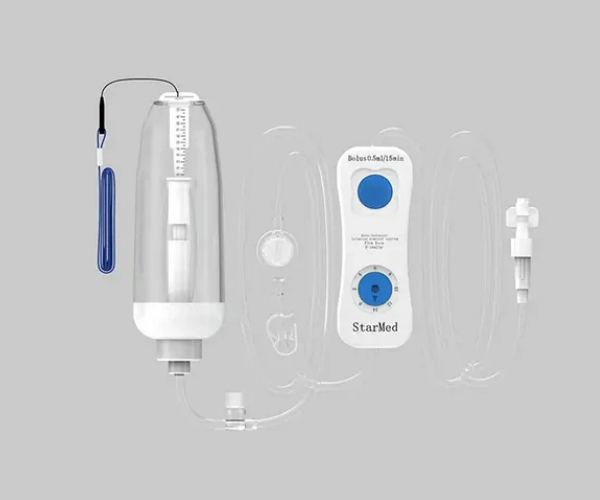
Patient-Controlled Analgesia (PCA) infusion pumps allow patients to administer controlled doses of pain medication within preset safety limits. This method improves patient comfort and reduces delays in pain relief.
Common medications include:
Opioid analgesics for moderate to severe pain
Non-opioid analgesics for multimodal pain management
Adjunct medications that enhance pain control
Infusion pumps ensure that pain medications are delivered steadily, preventing fluctuations that could lead to discomfort or complications.
During surgical procedures, precise administration of anesthetic and sedative drugs is critical. Infusion pumps provide the control needed to maintain stable sedation levels throughout operations.
These medications often require:
Continuous infusion to maintain anesthesia
Adjustments based on patient response
Strict monitoring for safety
By using an infusion pump, clinicians can fine-tune drug delivery, ensuring optimal surgical conditions and patient stability.
For severe infections, intravenous antibiotics are often administered through infusion pumps. Maintaining consistent drug concentrations in the bloodstream is crucial for effective treatment.
Infusion pumps are particularly useful for:
Long-duration antibiotic therapies
High-dose intravenous treatments
Managing resistant infections
They help ensure that antibiotics are delivered at the correct rate, maximizing therapeutic effectiveness while minimizing risks.
Cancer treatment often involves complex chemotherapy protocols that require precise dosing and timing. Infusion pumps play a vital role in delivering these medications safely.
Benefits in oncology include:
Controlled administration of cytotoxic drugs
Reduced risk of dosing errors
Support for both inpatient and outpatient treatments
Infusion pumps allow for continuous or programmed delivery, ensuring that chemotherapy drugs are administered according to strict clinical guidelines.
In addition to medications, infusion pumps are widely used to deliver essential fluids and nutrients.
These include:
Intravenous fluids for hydration
Electrolyte solutions for balance restoration
Total Parenteral Nutrition (TPN) for patients unable to eat
Accurate fluid management is critical in many medical conditions, and infusion pumps provide the consistency required for optimal care.
Patients with cardiovascular conditions often require continuous infusion of medications that regulate heart function and blood pressure.
Infusion pumps are used to deliver:
Vasopressors for blood pressure support
Antiarrhythmic drugs
Medications for heart failure management
These drugs require precise dosing, as even small variations can significantly impact patient stability.
Medication Category | Common Use Case | Infusion Pump Type | Clinical Benefit |
Pain Management | Postoperative pain control | PCA Infusion Pump | Patient-controlled dosing, consistent relief |
Anesthesia & Sedation | Surgical procedures | Electronic Infusion Pump | Stable sedation levels |
Antibiotics | Severe infections | Standard Infusion Pump | Maintains therapeutic concentration |
Chemotherapy | Cancer treatment | Programmable Infusion Pump | Precise and safe drug delivery |
Fluids & Nutrition | Hydration and TPN | Volumetric Infusion Pump | Accurate fluid balance |
Cardiovascular Medications | ICU and cardiac care | Continuous Infusion Pump | Stable hemodynamic control |
After surgery, patients often require continuous medication for pain relief and recovery support. Infusion pumps ensure that these medications are delivered consistently without interruption.
They help:
Maintain stable pain control
Reduce the need for repeated manual injections
Improve patient comfort and recovery experience
In ICU settings, patients often require multiple medications simultaneously. Infusion pumps are essential for managing complex treatment regimens.
They enable:
Simultaneous delivery of multiple drugs
Precise control of life-support medications
Continuous monitoring of infusion parameters
Continuous Bladder Irrigation (CBI) systems often rely on infusion pump technology to maintain a steady flow of irrigation fluids.
This application is important for:
Preventing clot formation
Maintaining urinary tract cleanliness
Supporting postoperative urological care
The integration of an Infusion Pump into clinical practice plays a crucial role in enhancing both medication accuracy and patient safety. By replacing manual administration with automated, programmable systems, infusion pumps help standardize drug delivery and reduce variability in treatment.
Manual medication delivery can be affected by factors such as miscalculation, inconsistent timing, or variations in administration techniques. Infusion pumps significantly minimize these risks by automating the process, ensuring that medications are delivered according to precise, pre-set parameters.
Infusion pumps allow healthcare providers to accurately configure infusion rates, volumes, and durations. This level of customization ensures strict adherence to clinical protocols, particularly for medications that require exact dosing.
Modern infusion pumps are equipped with monitoring systems that provide real-time feedback. Alerts and alarms notify clinicians of any irregularities, enabling prompt corrective action and enhancing patient safety.
Maintaining stable drug concentrations in the bloodstream is essential for effective therapy. Infusion pumps deliver medications continuously and consistently, supporting optimal treatment outcomes across various medical conditions.
Selecting the appropriate infusion pump depends on several factors, including the type of medication, clinical setting, and treatment requirements.
Different medications require different delivery mechanisms. For example:
PCA pumps for pain management
Volumetric pumps for fluids
Programmable pumps for chemotherapy
Hospitals, outpatient clinics, and home care settings may require different pump features and capabilities.
User-friendly interfaces and built-in safety mechanisms are essential for efficient and secure operation.
A versatile infusion pump can support a wide range of treatments, making it a valuable asset in healthcare facilities.
The Infusion Pump plays a vital role in modern healthcare, enabling precise, controlled, and safe delivery of a wide range of medications. From pain management and anesthesia to antibiotics and chemotherapy, these devices are essential for supporting critical therapies across diverse clinical settings. Their ability to enhance dosing accuracy, improve patient safety, and optimize clinical workflows makes them indispensable in today’s medical environment.
At Jiangsu Province Mingsheng Medical Apparatus Industry Co., Ltd., we are committed to providing reliable and advanced infusion pump solutions designed to meet the evolving needs of healthcare providers. With extensive industry experience and a strong focus on quality and innovation, we support medical professionals with products that ensure consistent performance and patient care excellence.
If you are looking for dependable infusion pump solutions or exploring long-term cooperation, we welcome you to connect with us to learn more about our capabilities and product offerings.
Infusion pumps are commonly used to deliver pain medications, antibiotics, chemotherapy drugs, fluids, and cardiovascular medications that require precise dosing.
Yes, infusion pumps are versatile devices capable of delivering a wide range of medications across different medical specialties.
Infusion pumps are ideal for long-term treatments that require continuous or controlled medication delivery, such as chemotherapy or chronic pain management.
By automating dosage control and providing monitoring features, infusion pumps reduce the risk of human error and ensure consistent drug delivery.
Yes, infusion pumps are also used in outpatient care, home healthcare, and specialized treatment centers, depending on the therapy requirements.


