
 English
Views: 0 Author: Site Editor Publish Time: 2026-07-29 Origin: Site


Performing neuraxial blocks requires an exacting level of clinical precision. You must achieve a successful dural puncture smoothly. You also need to ensure adequate cerebrospinal fluid (CSF) flow. At the same time, minimizing post-procedural complications remains absolutely vital. Choosing the right equipment goes far beyond simple personal preference. Needle selection directly impacts your daily operational efficiency. It changes first-pass success rates profoundly. It also dictates patient recovery metrics significantly.
This guide serves clinical directors, anesthesia providers, and procurement teams effectively. You will discover an evidence-based framework for evaluating vital parameters. We explore how different tip designs shape clinical outcomes. By the end, you will understand how to match the ideal tool to specific patient demographics. You will navigate complex equipment selections confidently.
Spinal needle size (gauge) dictates the trade-off between tactile feedback and the incidence of Post-Dural Puncture Headache (PDPH).
Pencil-point designs generally outperform cutting needles in reducing PDPH rates across diverse patient demographics.
Selecting a spinal needle for C section typically requires a 25G to 27G atraumatic tip to protect highly susceptible obstetric populations.
Standardizing needle inventory requires assessing introducer needle requirements, CSF flashback speed, and hub visibility.
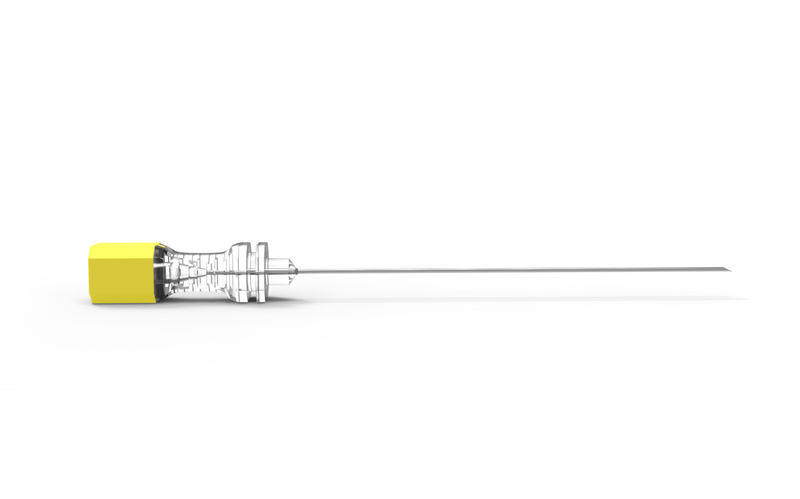
Understanding the gauge system is fundamental for all anesthesia providers. The gauge number shares an inverse relationship to the outer diameter. A 20G device is relatively thick and robust. Conversely, a 27G device is extremely thin and flexible. Most clinical facilities stock ranges between 20G and 27G. We must navigate this spectrum carefully every day.
Providers face a primary trade-off during every regional block. Larger devices offer faster CSF flashback immediately. They give you excellent, unmistakable tactile feedback. Their stiffer trajectory resists bending during deep insertion. However, they cause significantly more dural trauma. Smaller devices reduce this trauma effectively. Yet, they bend easily and yield much slower fluid return. You must weigh these factors against patient anatomy.
We see a direct correlation between thickness and Post-Dural Puncture Headache (PDPH). The dura mater consists of complex longitudinal fibers. Thicker profiles create larger, persistent holes in these protective layers. This leads to higher rates of continuous CSF leakage. Consequently, patients experience debilitating postural headaches. Standardizing a smaller spinal needle gauge serves as a prevalent risk-management strategy. Clinical literature heavily supports this approach. Reducing gauge thickness drops complication rates exponentially.
Fluid flow dynamics matter immensely in diagnostic procedures. A smaller internal diameter restricts fluid return drastically according to Poiseuille's law. Slow return extends the time required to confirm correct placement. It delays the injection of local anesthetics. We must balance patient comfort against procedural efficiency constantly. Sometimes waiting thirty seconds for fluid verification feels impractical. You must select a gauge reflecting the clinical urgency.
The debate over quincke vs whitacre shapes modern anesthesia guidelines deeply. Each design interacts uniquely with human tissue layers. We must understand these mechanical differences thoroughly to protect our patients.
The Quincke design features a classic cutting or beveled tip. It actively cuts through tough dural fibers upon entry. This aggressive mechanism requires minimal insertion force. Providers enjoy highly precise directional control throughout the procedure. However, cutting fibers creates higher incidence rates for dural tearing. This elevates PDPH risk substantially across all age groups. Many advanced hospitals are gradually phasing out these cutting designs. They avoid them entirely for routine obstetric cases today.
Conversely, the Whitacre design uses a pencil-point, atraumatic tip. It separates dural fibers rather than violently cutting them. It features a closed tip housing a smooth lateral opening. This design drastically reduces PDPH incidence overall. Dural fibers can recoil and close more effectively post-procedure. One notable drawback involves the altered tactile response. It requires slightly more insertion force to penetrate the ligamentum flavum. The distinctive tactile "pop" differs noticeably from sharp cutting varieties. Providers often need a brief adjustment period to master this feel.
Alternative atraumatic designs also exist in the medical market. Sprotte models feature a notably larger lateral eye. This specific modification improves CSF flow significantly. Providers often prefer them when dealing with viscous fluids or urgent cases. The elongated opening requires precise depth management, however.
Feature | Quincke (Cutting) | Whitacre (Pencil-Point) |
|---|---|---|
Tip Mechanism | Cuts dural fibers | Separates dural fibers |
Insertion Force | Lower force required | Slightly higher force required |
Tactile Feedback | Sharp, distinct penetration | Subtle, blunt "pop" sensation |
PDPH Risk Profile | High incidence rate | Significantly reduced incidence rate |
Primary Application | Diagnostic LP, thick anatomy | Obstetrics, routine neuraxial blocks |
Selecting the correct spinal needle size requires assessing the specific procedure accurately. We must tailor our approach to the individual patient profile. A one-size-fits-all mentality leads directly to compromised patient care.
Young, pregnant patients face peak physiological risks for PDPH. Their hormone levels and tissue elasticity create unique vulnerabilities. Delivering regional anesthesia safely is our absolute paramount concern. The standard requirement involves a 25G to 27G Whitacre or Sprotte design. Choosing a reliable spinal needle for c section prioritizes patient comfort seamlessly. It enables rapid post-operative recovery over sheer insertion speed. Obstetric wards mandate atraumatic options to facilitate immediate mother-infant bonding. Minimizing headache risks ensures mothers remain comfortable and highly mobile.
Diagnostic taps require highly accurate opening pressure measurements. Neurologists might also need to extract highly viscous fluids safely. The standard requirement shifts to 20G or 22G atraumatic models. Smaller gauges, like 24G or higher, prove problematic here. They often yield clinically impractical flashback times for pressure manometry. Measuring pressure through a microscopic lumen causes severe damping effects. We must ensure diagnostic accuracy does not suffer. Using slightly larger sizes guarantees reliable manometry readings consistently.
Older patients present incredibly unique anatomical challenges daily. Narrowed interspinous spaces complicate subarachnoid access severely. Dense, calcified ligaments cause fine instruments to deflect almost instantly. Providers typically rely on stiffer 22G or 24G options. We often combine these robust tools with a supportive introducer. This combination maintains structural integrity without inflicting excessive dural trauma. Navigating osteophytes demands a tool capable of transferring directional force accurately.
Every invasive technique carries inherent implementation risks. We must anticipate and manage these procedural challenges actively. Proper technique minimizes equipment-related failures greatly.
You risk bending the instrument when utilizing ultra-fine 26G or 27G models. Dense muscle tissue can push a highly flexible shaft completely off-axis. This deflection complicates targeting the subarachnoid space accurately. When the tip veers laterally, you encounter bone rather than the target space. Providers must advance the instrument carefully, millimeter by millimeter.
Smaller gauges mandate the use of a robust larger introducer. A 20G introducer guides the fragile primary instrument safely. It bridges the path past tough superficial ligaments effectively. Furthermore, it prevents superficial skin flora from contaminating the deeper spinal canal. The introducer acts as a rigid conduit for the flexible shaft. You insert the introducer first, then pass the finer tool through it smoothly.
Pencil-point designs locate the fluid orifice laterally. This lateral eye requires incredibly careful depth adjustment. You must ensure the entire orifice sits inside the subarachnoid space. If it straddles the dura, you risk injecting anesthetic into the epidural space. This misplacement causes patchy, incomplete, or totally failed blocks. Obstetric cases cannot tolerate such anesthetic failures. You must verify robust fluid flow before injecting any medication.
Best Practices:
Always stabilize fine shafts using a firm two-handed grip.
Verify clear, continuous fluid flow before injecting your chosen medication.
Use an introducer for any size smaller than 25G routinely.
Pause and observe the hub for at least ten seconds with ultra-fine gauges.
Adjust patient positioning meticulously to open interspinous spaces maximally.
Common Mistakes to Avoid:
Pushing too rapidly through the dense ligamentum flavum.
Ignoring subtle tactile feedback changes during insertion.
Failing to rotate the hub slightly if fluid flow appears absent.
Applying excessive lateral force when encountering sudden bony resistance.
Purchasing decisions shape daily clinical workflows directly and heavily. Facilities must evaluate their available options using evidence-based logic. Procurement is never merely an administrative task.
Hospitals must evaluate the clinical benefits of their stocking strategies. Stocking multiple specialized gauges offers immense flexibility for rare cases. However, standardizing on a versatile mid-range gauge streamlines inventory significantly. A high-quality Spinal Needle, such as a 25G Whitacre, handles most neuraxial blocks efficiently. This consolidation reduces storage clutter. It also minimizes the cognitive load on staff during emergency setups. You balance everyday versatility against niche procedural requirements.
Evaluate manufacturer quality meticulously before finalizing decisions. Hub transparency proves absolutely crucial in modern clinical environments. You need a crystal-clear hub to detect slow fluid flashback immediately. This becomes critical when using ultra-fine 27G models. Poor plastic clarity obscures the tiny initial drops of fluid. Stylet fit also demands strict, rigorous attention. A flush-fitting stylet prevents accidental tissue coring during insertion. Tissue coring can result in severe long-term neurological complications.
You must select vendors who offer reliable, tight manufacturing tolerances. Inconsistent production leads to varying rigidity between different batches. Tip integrity must remain flawless every single time you open a package. Rough edges on an atraumatic tip negate all its clinical benefits instantly. Reliable vendors protect your facility against unexpected procedural failures. Request physical samples from multiple lots before making large commitments. Test the flexibility and stylet smoothness by hand.
Choosing an optimal device represents a crucial clinical risk-management decision. We must constantly balance insertion efficacy against vital PDPH mitigation. Patient outcomes hinge on this delicate balance.
We strongly recommend a baseline standard of atraumatic pencil-point designs. You should utilize them for all routine neuraxial anesthesia cases. You should reserve larger cutting designs strictly for specific diagnostic challenges. Older patients with dense anatomy may also necessitate stiffer, more robust options temporarily.
Encourage regular clinical audit reviews within your specific department. Tracking PDPH rates informs better, data-driven procurement decisions over time. Continuous quality improvement requires transparent data tracking.
Actionable Next Steps:
Audit your current inventory to identify any outdated cutting designs hiding in obstetric carts.
Standardize your primary obstetric kits strictly around 25G or 27G atraumatic options.
Implement hands-on training sessions focusing on introducer techniques for fine-gauge shafts.
Review vendor samples specifically for exceptional hub transparency and precision stylet fit quality.
Establish a departmental protocol dictating exactly when providers may step up to a larger gauge.
A: For routine adult neuraxial anesthesia, the 25G size remains the most common choice worldwide. It offers an excellent balance between structural rigidity and minimizing post-dural puncture headache risks. It provides adequate tactile feedback while ensuring reliable, relatively quick fluid flashback.
A: An introducer is a shorter, thicker needle placed superficially. You insert it through the tough skin and supraspinous ligaments first. Then, you pass the delicate fine-gauge instrument through the introducer's hollow lumen. This prevents the primary shaft from bending and protects it from skin contaminants.
A: Obstetric patients face exceptionally high risks for postural headaches due to age and physiological changes. Using fine 25G or 27G atraumatic options minimizes dural trauma significantly. This prioritizes maternal comfort, allows for rapid postoperative mobilization, and prevents debilitating complications during early infant bonding.
A: Yes. While Quincke (cutting) models historically dominated diagnostic procedures due to fast fluid return, current guidelines increasingly favor Whitacre (atraumatic) models. Even for diagnostic taps, atraumatic designs reduce headache rates. However, neurologists may still choose larger cutting types if they need to extract highly viscous fluids rapidly.
A: Flashback in an ultra-fine 27G lumen can take anywhere from 10 to 30 seconds. The restrictive internal diameter slows fluid dynamics considerably compared to larger gauges. Providers must exercise patience, holding the hub perfectly still and observing carefully before making any depth adjustments.


